A Birth, a Bereavement, and the Essence of Snoop Dogg

Tech needs better definitions
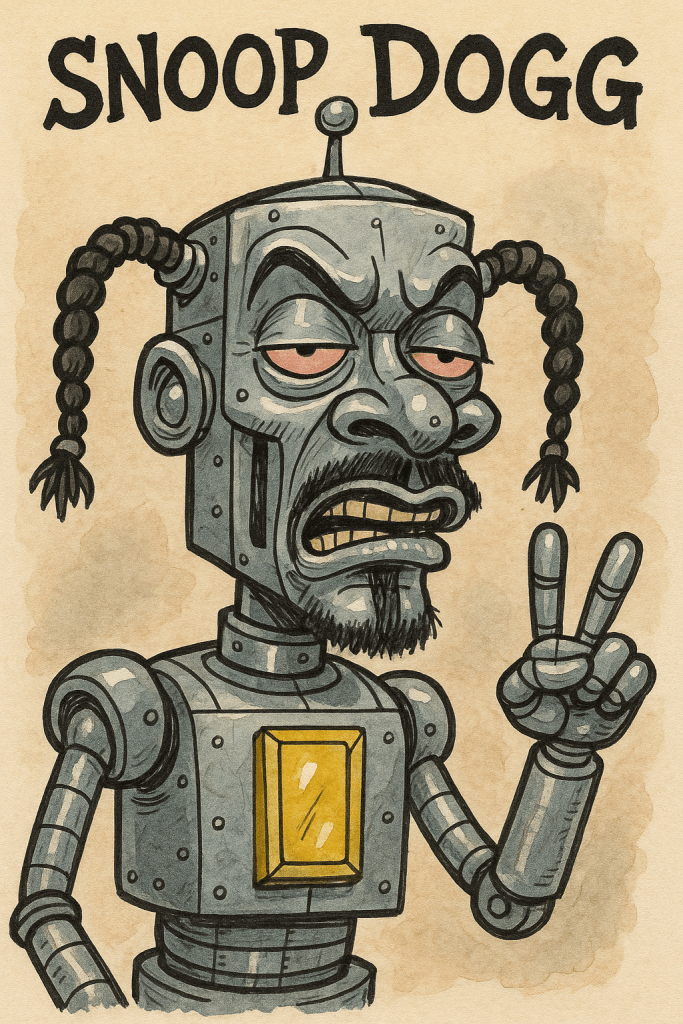
Dall-E at it’s absolute finest

As the curtain fell on 2024, I had a baby. It was Friday the 13th, a date often associated with bad luck thanks to European superstitions stretching back a couple of hundred years. There is even a specific term to describe the “fear of Friday the 13th”: paraskevidekatriaphobia. Although urban legend actually has it that the shrink that coined it declared anyone who learned to pronounce it would be cured, which suggests a sense of humor (and reminds us how extra humans can be…).

And while my husband and I likewise noted the date as a humoress quirk, bad luck would, in fact, catch-up with us. Just five weeks later my Dad died. Baz Luhrman was onto something when he said the real troubles in life blindside you on an idle Tuesday afternoon.

Though he’d been ill for a while my father’s passing wasn’t expected, and I found myself in the strange and bewildering position of both gaining and losing a fundamental life force in such quick succession that it felt simultaneous. In the paperwork and aftermath, I occasionally confused my father’s DOD for our baby’s DOB. Those who have had similar experiences may relate to the feeling of being in some strange existential continuum, whereby it seems impossible that there wasn’t some kind of transfer. Like one Dr. Who fluidly regenerating into the next

Continue reading

Missives from Cannes: Three Observations on Gen AI Application

Enthusiasm abounded at the World AI Cannes Festival

La Croisette de Cannes dans les années 1930

By now, we’re well-accustomed to waves of tech-based fervor. You don’t really have to touch the industry to have become a cynic. Perhaps you remember “peak blockchain” in 2019, when the technology was integrated into a toothbrush for reasons that no-one will ever begin to understand?

And of course, we’ve endured fanfare and furor over the metaverse, XR, Big Data, crypto, Web3, NFTs, quantum computing and, most notably, we’ve seen AI grow legitimate roots as the defining technology of its era (while its name continues to be frequently used and abused by sneaky bandwagon jumpers…).  

On those firm foundations, generative AI is the term at the center current hype-cycle. In Cannes last week a reported 16,000 attendees swarmed on the famed Palais des Festivals et Des Congrès to learn about it, talk about it, and – for many – showcase the tentative steps they’ve taken towards real-world application.

As with previous seasons, there was an urgency (perhaps even a whiff of desperation…?) in the air as companies from industries as diverse as hospitality, finance, entertainment, marketing, and pharma joined this latest gold rush as hopefuls. And, unsurprisingly, both snake oil and substance could be found.

I was lucky enough to host the festival’s Applications Stage, and here are three broad-brush observations I made:

Continue reading

Raising Baby AI in 2024

Davos 2024 convened a panel of experts to terrify and reassure us in equal measure

Image created by Dall-E 2

You’d have to be living under a rock to entirely swerve the avalanche of AI predictions for 2024. They typically fall into three camps – extreme AI optimism, extreme AI pessimism, and a sort of vanilla-flavored corporate edition whereby the author safely predicts things that are already happening.

Much more interesting was a meeting at Davos 2024 yesterday, where a panel of undisputed AI silverbacks gathered to discuss the trajectory of AI’s sexiest zeitgeist – large language models (LLMs).

Continue reading

ChatGPT: A Cautionary Tale (With Some Positive Takeaways)

I haven’t posted in a while. In truth, there hasn’t been a lot that’s piqued my interest, and there are now elaborate global mechanisms and a squadron of eager commentators prepped and ready to address the issues I used to point at on this humble blog. In November, I could’ve written something predictable about the impact of ChatGPT, but I felt like I’d already played that tune back in 2020 when I attempted to summarize the intelligent thoughts of some philosophers.

ChatGPT. GPT-3. Potato. Potato.

The most interesting aspects of this kind of AI are yet to come, I don’t doubt that. But I am here to share a cautionary tale that syncs nicely with my ramblings over the last 5 (5??) years. It’s a story about reliance and truth. About the quest for knowledge, and how it almost always involves some level of fumbling around in the dark, but never more so than now.

The Uncanny Valley and the Meaning of Irony

There has been a lot of discussion about how human is too human when it comes to robots, bots, and other types of disembodied AI voices. An interest in this topic led to a frustrating Google search which led me to…you guessed it…ChatGPT.

What did we ever do without it? I’m starting to forget.

Continue reading

Misinformation About Misinformation?: Report Advises “Don’t Hit Delete”

It’s hard to remember a time before we spoke animatedly about fake news and misinformation. For years now there has been primetime public discussion about the divisiveness of online content, and the way social media platforms can effortlessly propagate harmful conspiracy theories, as well as other baseless assertions masquerading as facts.

In 2018, Dictionary.com announced that misinformation was its “word of the year,” and before that scholars like Caroline Jack made valiant efforts to define the many types of online deceit, as in her 2017 study, Lexicon of Lies.

With a certain amount of discomfort, we have come to accept the downstream effects of users being trapped in “echo chambers” and the “filter bubbles” that reinforce and amplify false and harmful dialogue (with potentially devastating real-world consequences).

Many organizations — from NGOs to Big Tech — have pledged to fight misinformation and the circumstances that catalyze it’s spread, and there have been loud calls to identify and remove misleading content. When COVID-19 came along, ensuring scientific information wasn’t drowned out by falsehoods became a matter of life and death, and many platforms did axe posts to protect users (see YouTube and Facebook).

It is curious, then, that a new report by The Royal Society named The Online Information Environment calls into question some popular assumptions about misinformation.

Continue reading

Now You Need To Know What A “Metaverse” Is — 6 Reasons To Listen Up

Prepare to step into the internet…(sort of)

Decentraland

Last week, the tech media treated us to the latest power move to promote a future of “visual search“, with social giant Snapchat pushing their Scan feature front and center on the app’s camera. Scan allows Snapchat users to detect and search for things they find in the physical world — clothes, dog breeds, food nutrition information, plants, wine, furniture, etc. And as the app opens in camera mode, this visual search feature is now available to 300 million daily users, which could see Snapchat evolving from a messaging app to a leading visual search engine (see full reporting from The Verge).

While this move toward visual search clearly presents commercial opportunities for retailers (note: Scan isn’t currently being used for ad targeting, but it’s not difficult to see how this is where it could wind up…), arguably there some advantages for users. For one, it could force us to drag ourselves out of cyberspace and into a healthier, more interactive relationship with the world around us.

After all, how many of us are guilty of disengaging from our surroundings in order to Google something that’s physically right in front of us? (*Raises hand*).

Yet, just as the merging of our on-and-offline worlds starts to look good for our vitamin D intake, we hear the noise of year’s buzziest of buzzwords being chanted more loudly in Silicon Valley: The Metaverse. If you don’t already know what it is, then you should know that it’s on its way to turn us all into washed out, disengaged husks of remote humanity. But here’s a more helpful description from the Wall Street Journal:

“The metaverse concept, rooted in science-fiction novels such as “Snow Crash” and “Ready Player One,” encompasses an extensive online world transcending individual tech platforms, where people exist in immersive, shared virtual spaces. Through avatars, people would be able to try on items available in stores or attend concerts with friends, just as they would offline.”

Or more briefly from the NY Times: “…a fully realized digital world that exists beyond the analog one in which we live.”

If that didn’t make it too much clearer, here’s why you should still sit up and care:

Continue reading

Insidious “corrective” image filters allow app creators to dictate beauty standards

Portrait thought to be of Simonetta Carraneo Vespucci by Sandro Botticelli c.1480-1485.

In the 15th century, Florentine statesman and all-round bigwig Lorenzo d’Medici (also modestly known as “Lorenzo The Magnificent”) made some pretty outspoken comments on the looks and deportment of the ideal Italian Renaissance beauty. Despite himself being described as “quite strikingly ugly“, Lorenzo was rather specific on what should be considered desirable, basing his high standards on celebrated noblewoman Simonetta Carraneo Vespucci. He writes:

of an attractive and ideal height; the tone of her skin, white but not pale, fresh but not glowing; her demeanor was grave but not proud, sweet and pleasing, without frivolity or fear. Her eyes were lively and her gaze restrained, without trace of pride or meanness; her body was so well proportioned, that among other women she appeared dignified…in walking and dancing…and in all her movements she was elegant and attractive; her hands were the most beautiful that Nature could create. She dressed in those fashions which suited a noble and gentle lady…” (Commento del magnifico Lorenzo De’ Medici sopra alcuni de’ suoi sonetti)

Clearly beauty standards have evolved since Lorenzo’s time — and thankfully we’re probably less concerned about the restraint of our gaze and the beauty of our hands — but this notion of one common beauty ideal for women, dictated from without, unfortunately persists. And while Renaissance women agonized about achieving Simonetta’s bodily proportions and alabaster skin, their 21st century counterparts are turning to technological, and even surgical correction to emulate the new, algorithmically dictated standards for attention-worthy good looks.

Continue reading

Here’s How AI Could Diagnose You With Psychopathy

We’re fast becoming accustomed to clandestine observation. Quietly, in the background, algorithms have been watching our facial expressions, features, and behavioral mannerisms to try to establish a supposed “understanding” of such things as our job suitability, our sexuality, what “subcategory of person” we fit, and even our propensity for criminality

Of course, that’s on top of the mammoth and ongoing analysis of the vast digital footprints Big Tech companies use to fuel their hit-and-miss predictions. 

But what about an AI tool that can diagnose your mental health — or more specifically, whether you’re a psychopath — just by looking at you?  

Well folks, here we are. 

A study, Quantifying the psychopathic stare: Automated assessment of head motion is related to antisocial traits in forensic interviews, was recently published in the Journal of Research in Personality, which shows “promising” signs of just such a technology. 

Continue reading

Does This $3.25m Funding Round Mark A New Phase of All-Pervading Surveillance?

Image from the Mindtech Global website

A lot has been made of surveillance technology in recent years. Our once relatively benign CCTV setup has been given an AI-driven makeover. At the same time, lower production costs have facilitated a kind of “camera creep” evident in the boom in home security cameras, police bodycams and the trend for heightened employee surveillance

Many cameras now also have so-called facial recognition technology baked in, allowing them to identify and track rule breakers. (Though volumes of evidence stands to show that the technology is often deeply flawed and discriminatory.) 

And while surveillance cameras have become more pervasive and (arguably) more sophisticated in what they can identify — like faces or employee inattention or even a distinctive gait — bigger plans are afoot, and a recent investment boost for a small UK start-up called Mindtech Global might give us a clue as to how things will unfold. 

Continue reading